Case study
Soteria
An alternative to social media, built in VR, that lets people share what they actually feel instead of what looks good.
At a glance
| Context | Graduate innovation project at Columbia University, designed for remote workers experiencing social isolation |
| Role | Learning Experience Designer · UX Designer · VR Developer |
| Team | Built with two teammates at Teachers College |
| Duration | 6 weeks |
| Tools | Unity3D, Figma, Miro, Adobe After Effects, Tilt Brush |
| Platforms | Mobile + Virtual Reality |
| Outcome | People's Choice, Innovation Award 2022, Teachers College, Columbia University. Shown at the Digital Futures Institute. I was invited into the DREAMS Project |
The work
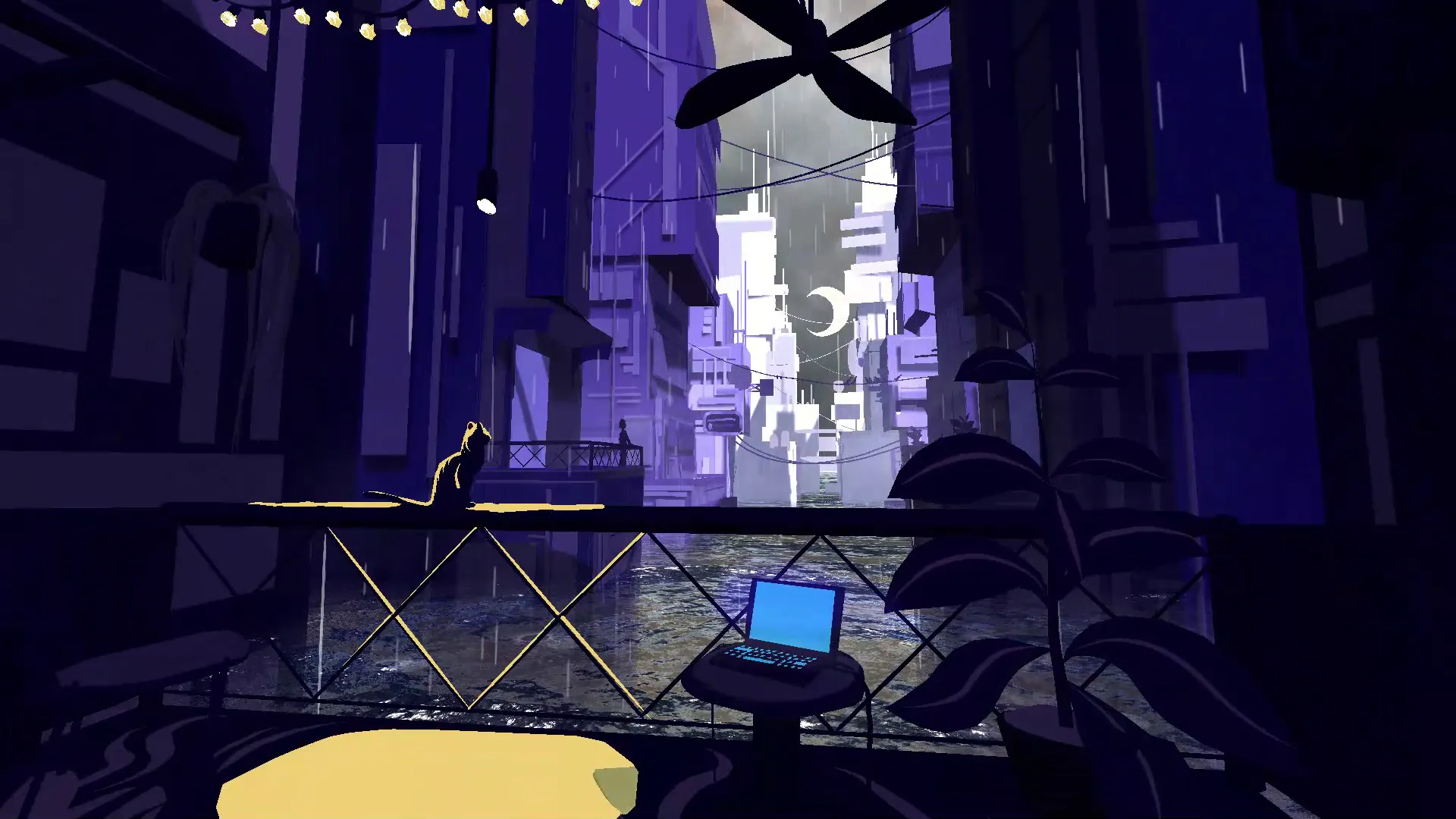
A phone that asks, and a world where the answer appears.
The problem
Remote work cut people off from the everyday contact that carries social support, and the loneliness that followed was hard to cope with. It also blurred work and home, and social media absorbed both. People reached for it to feel less alone, but it rewards an idealised self, and comparing yourself to people who appear to be doing better is linked to shame, envy and a sense of otherness. That drives the cycle on: perceived isolation, less help-seeking, deeper isolation.
The platform people reach for to fix isolation is built in a way that deepens it.
- Environmental Factors
- Remote work blurring the lines between personal and work lives
- ↑ Social isolation
- ↑ Unrealistic social comparisons
- Beliefs
- ↓ Coping self-efficacy
- ↑ Maladaptive interpretation of problems
- Maladaptive Behaviors
- Avoidance
- Denial
- Not seeking care
- Health Outcomes
- ↑ Loneliness
- ↑ Stress
- ↺ Avoiding enlistment of social support
The design question, in that order:
How can people's ability to cope with loneliness be increased by enhancing the social support around them? And how can the platform that support runs on stop producing the unrealistic comparison that currently makes loneliness worse?
Sources.
Alfasi, Y. (2019). The grass is always greener on my friends' profiles: The effect of Facebook social comparison on state self-esteem and depression. Personality and Individual Differences, 147, 111-117.
Reinecke, L., & Trepte, S. (2014). Authenticity and well-being on social network sites: A two-wave longitudinal study on the effects of online authenticity and the positivity bias in SNS communication. Computers in Human Behavior, 30, 95-102. https://doi.org/10.1016/j.chb.2013.07.030
The solution
The objective is to increase people's ability to cope with loneliness by enhancing the social support available to them. That support has to run somewhere people are willing to be honest, and the platforms they already use are not that place. So Soteria is also an alternative to them: one that meets the needs for companionship, intimacy, belonging and reassurance of self-worth while avoiding addictive features and drawing out authentic disclosure rather than performance.
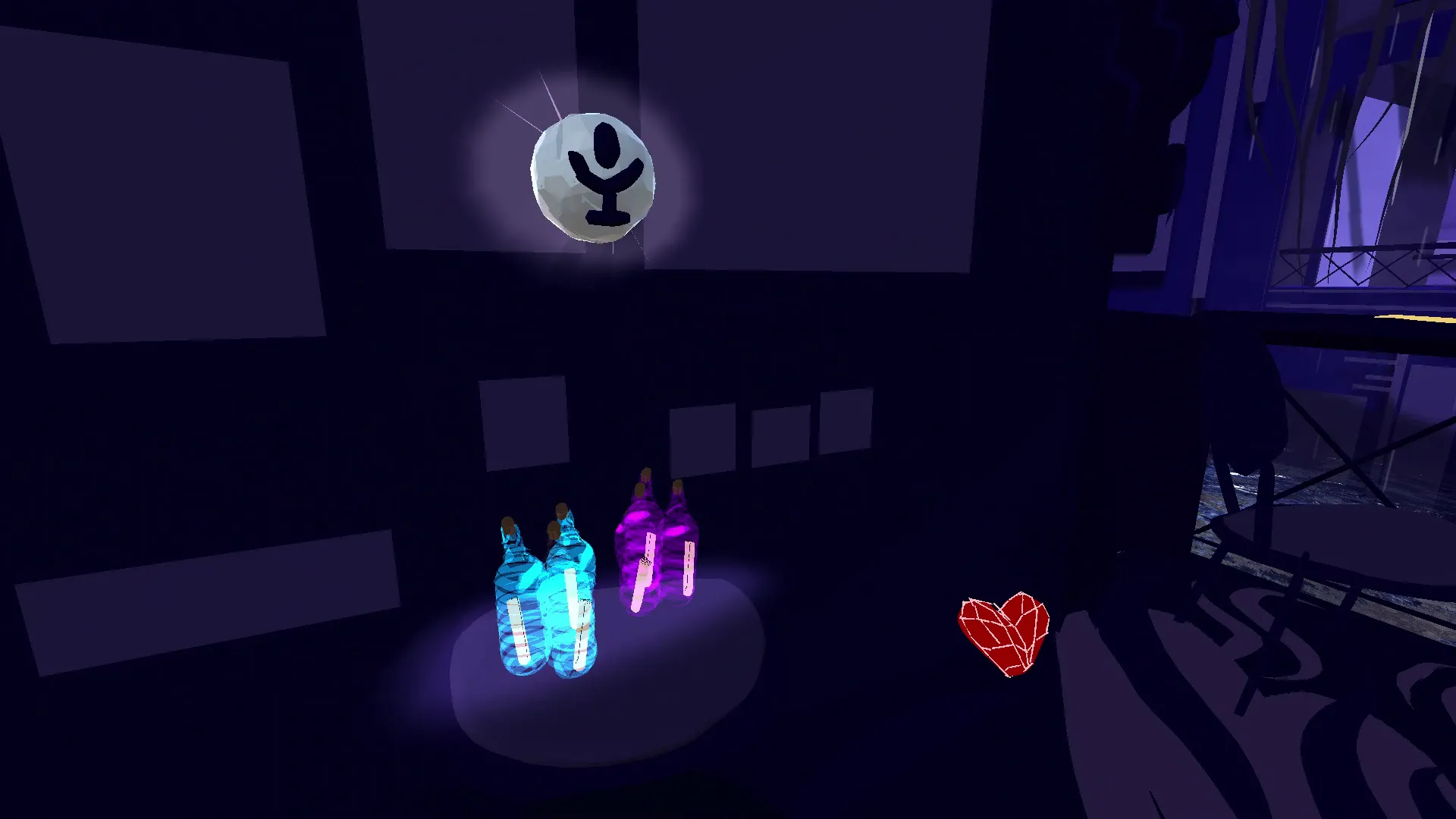
Soteria captures people's genuine thoughts and feelings through short, randomly timed mobile prompts, then turns them into objects in a shared virtual world: a message in a bottle, a change in the weather, a flower in a garden. Anyone can visit them anonymously.
- Soteria features
- Snapshots of user emotions
- Anonymous sharing
- Presence from Virtual Reality
- Communal problem-solving space
- Beliefs
- ↑ Coping self-efficacy
- ↑ Constructive interpretation of problems
- Health Behaviors
- ↑ Self-disclosure
- Venting feelings
- Problem-solving
- Health Outcomes
- ↑ Social connectedness
- ↑ Positive emotion / life satisfaction
- ↑ Self-esteem
- ↺ Enlistment of social support
How it works
Enhancing the social support around someone
Enhancing social support improves health by meeting basic human needs for companionship, intimacy, a sense of belonging, and reassurance of one's own worth, even in otherwise stressful situations. It also increases problem-solving ability, access to new contacts and information, and perceived control over a situation, all of which buffer against stress (Glanz et al., 2008; Thoits, 1995).
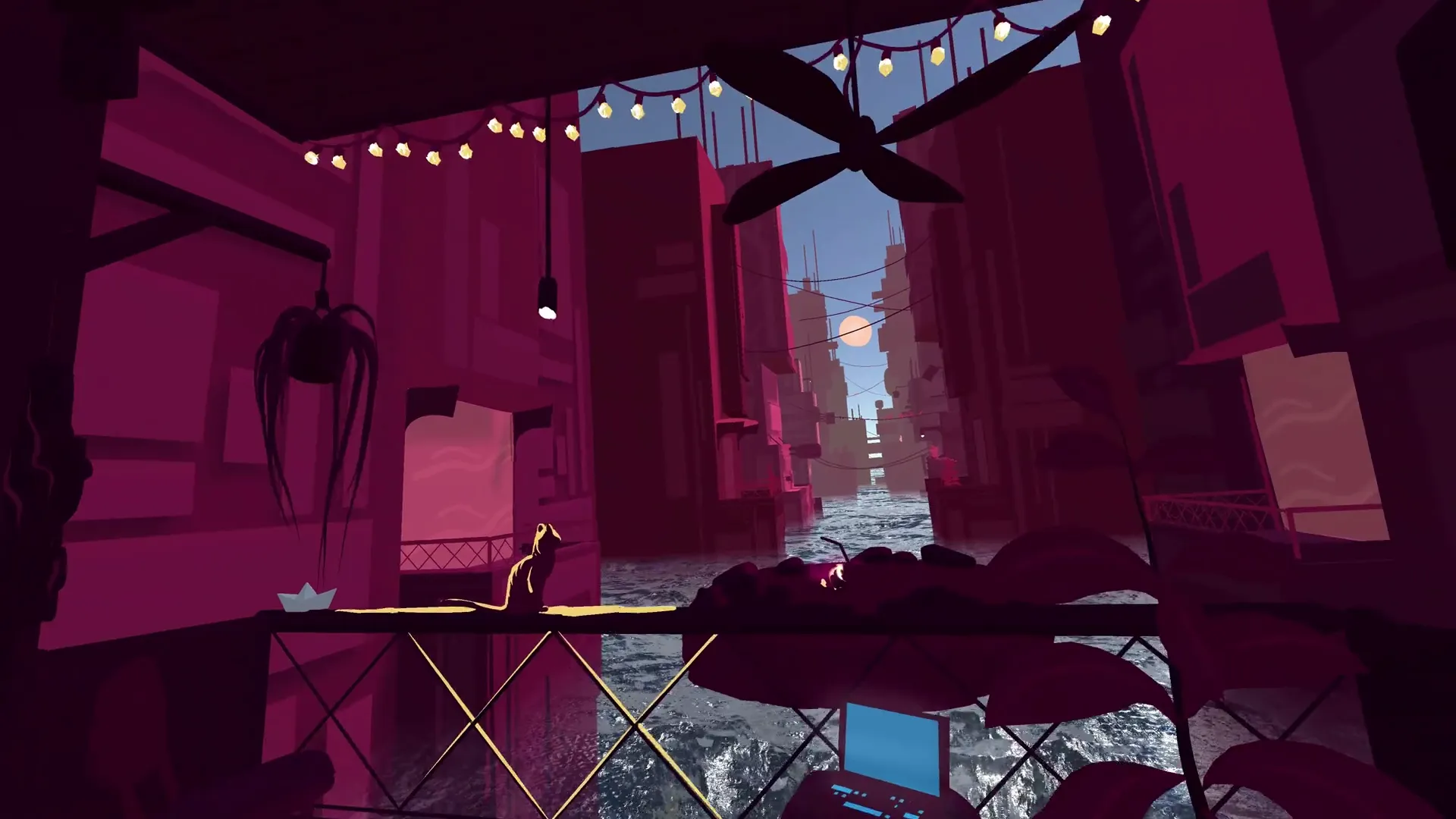
Presence with VR
Immersive first-person embodiment; users read avatar actions as their own.
Text sympathy is thin. Feeling with someone requires being somewhere with them.
VR produces embodied immersion in which users perceive avatar actions as their own, improving their ability to understand others and their sense of being together (Shin, 2017).
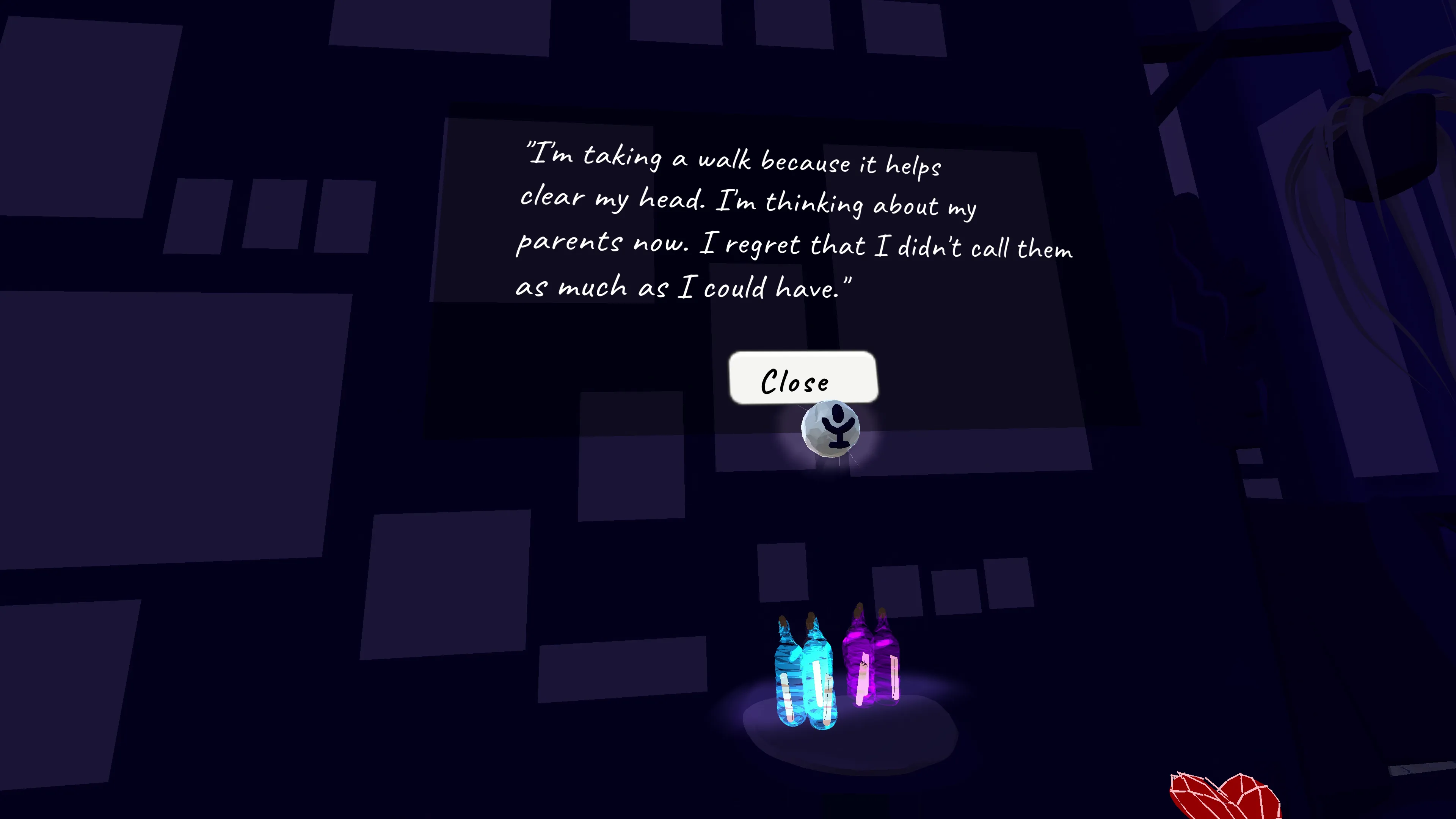
Message Exchange
Leave and save replies at the campfire, or on shared objects like bottled messages.
Someone who discloses and hears nothing back learns not to disclose.
Offering encouragement to others is itself a route to self-efficacy (Bandura, 1977).
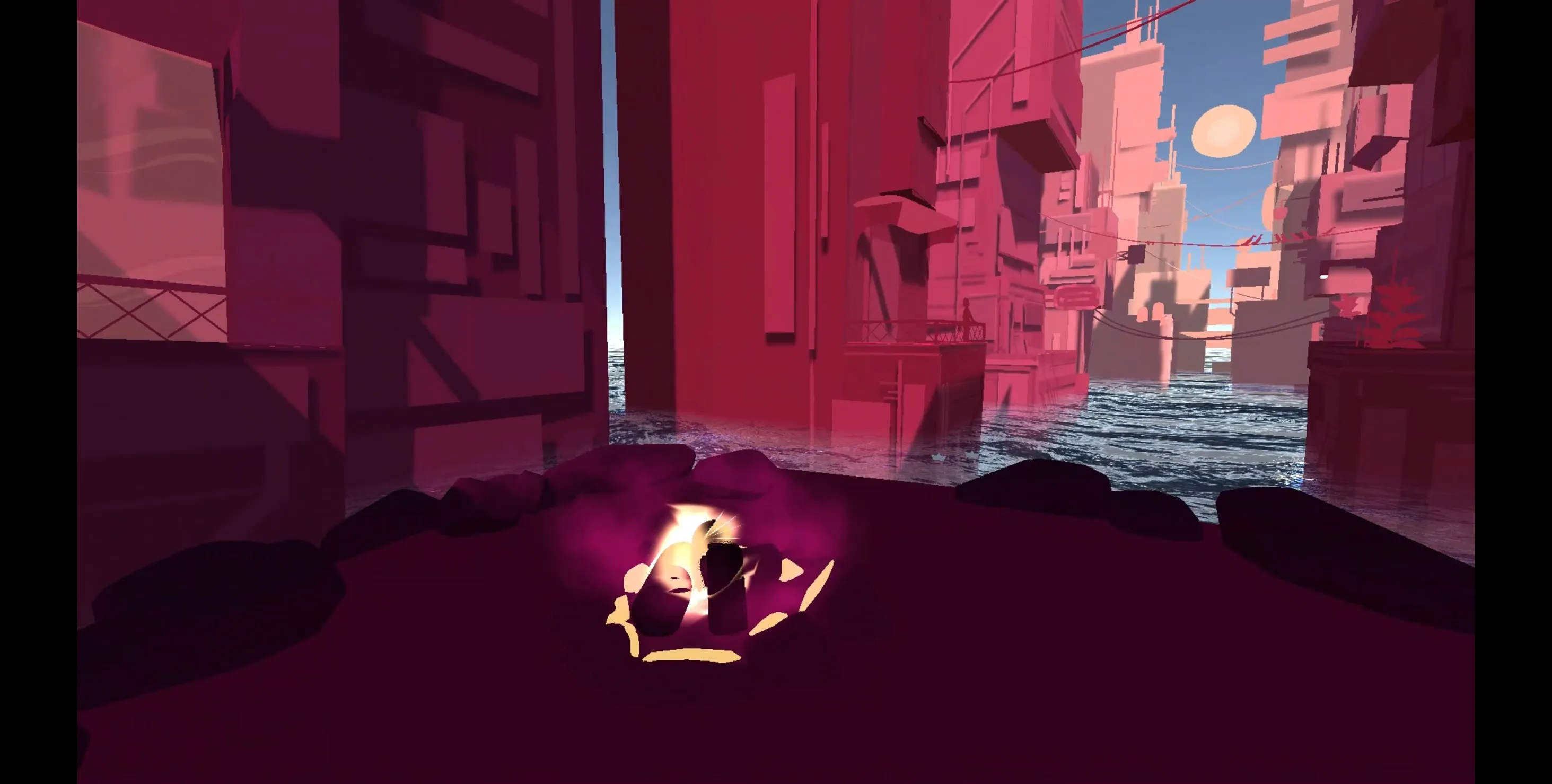
Communal Spaces
Shared places for problem-solving and hope-sharing, such as a campfire.
Isolation narrows your sense of which problems are normal and which strategies exist.
Peer modelling strengthens coping self-efficacy (Bandura, 1977). Having people to confide in shapes perceptions of risk and severity, and helps identify problems and strategies needing adjustment (Glanz et al., 2008).
Professional Help
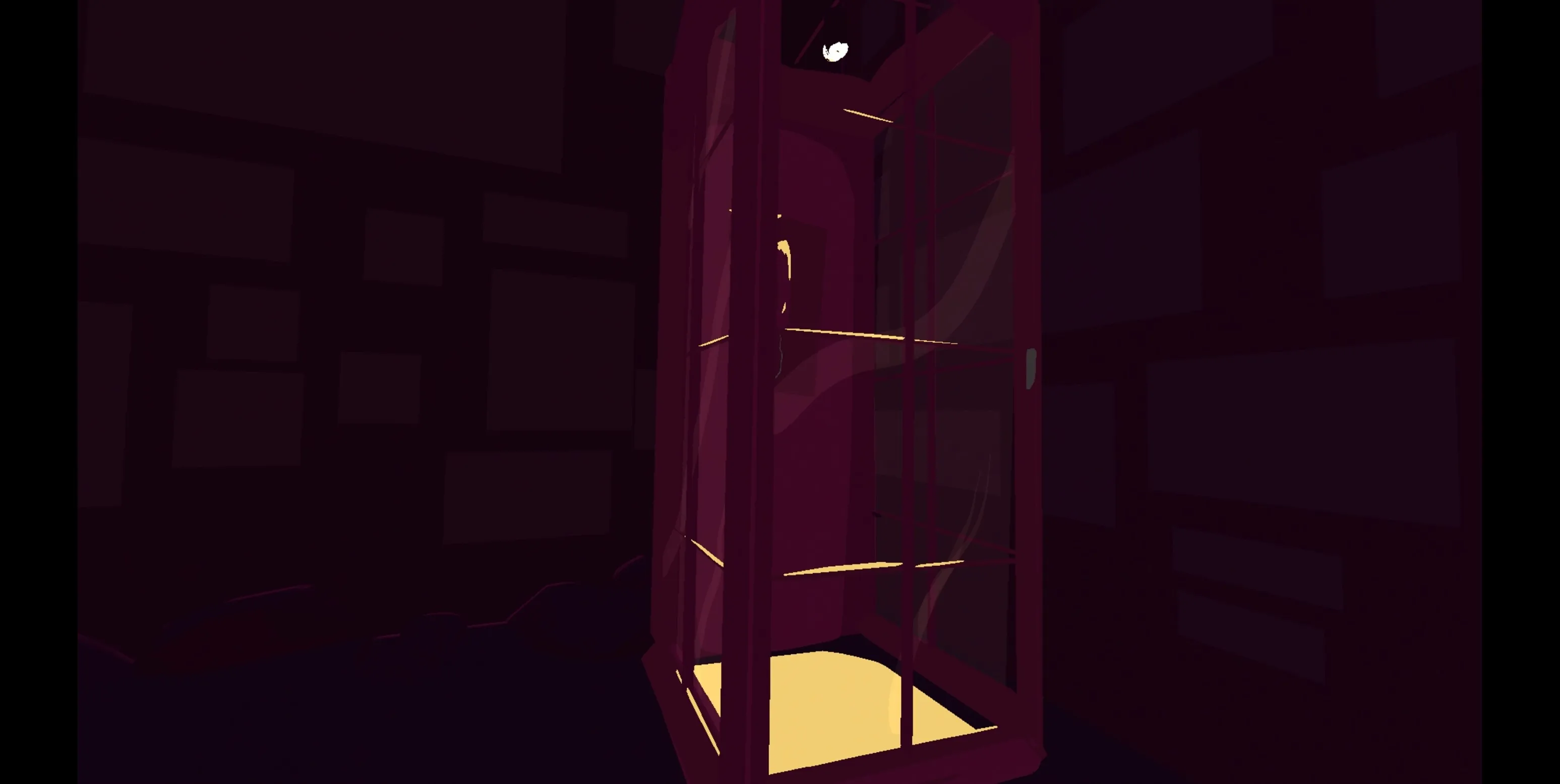
A phone booth in each personal space connects to mental health professionals.
Peer support has a ceiling. A product about mental health needs a route to real care, and needs it to be visible before a crisis.
A design rationale, not a citation. Labelled as one deliberately. Making the route to care a permanent fixture of the personal space, rather than something to go and find, moves the decision to use it earlier: it is taken once, calmly, in advance, instead of at the moment when the capacity to search for help is lowest.
An alternative worth being honest on
Social media platforms can reduce wellbeing in two ways at once: through widespread hostility and insults (Moor et al., 2010), and through the unrealistic social comparison that selective self-presentation produces. An alternative has to avoid both while still meeting the same human needs the first group describes.
Snapshots of Daily Life
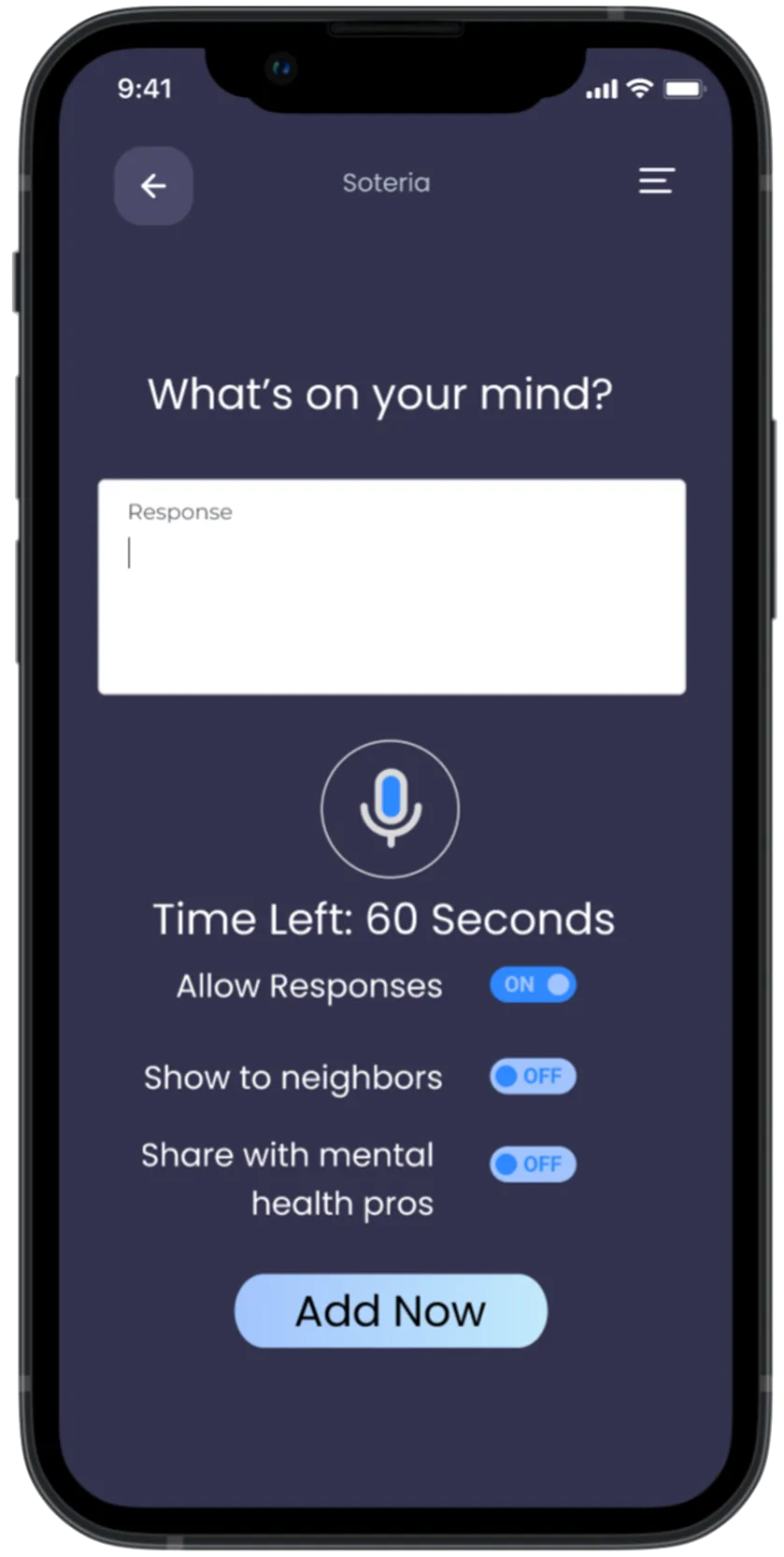
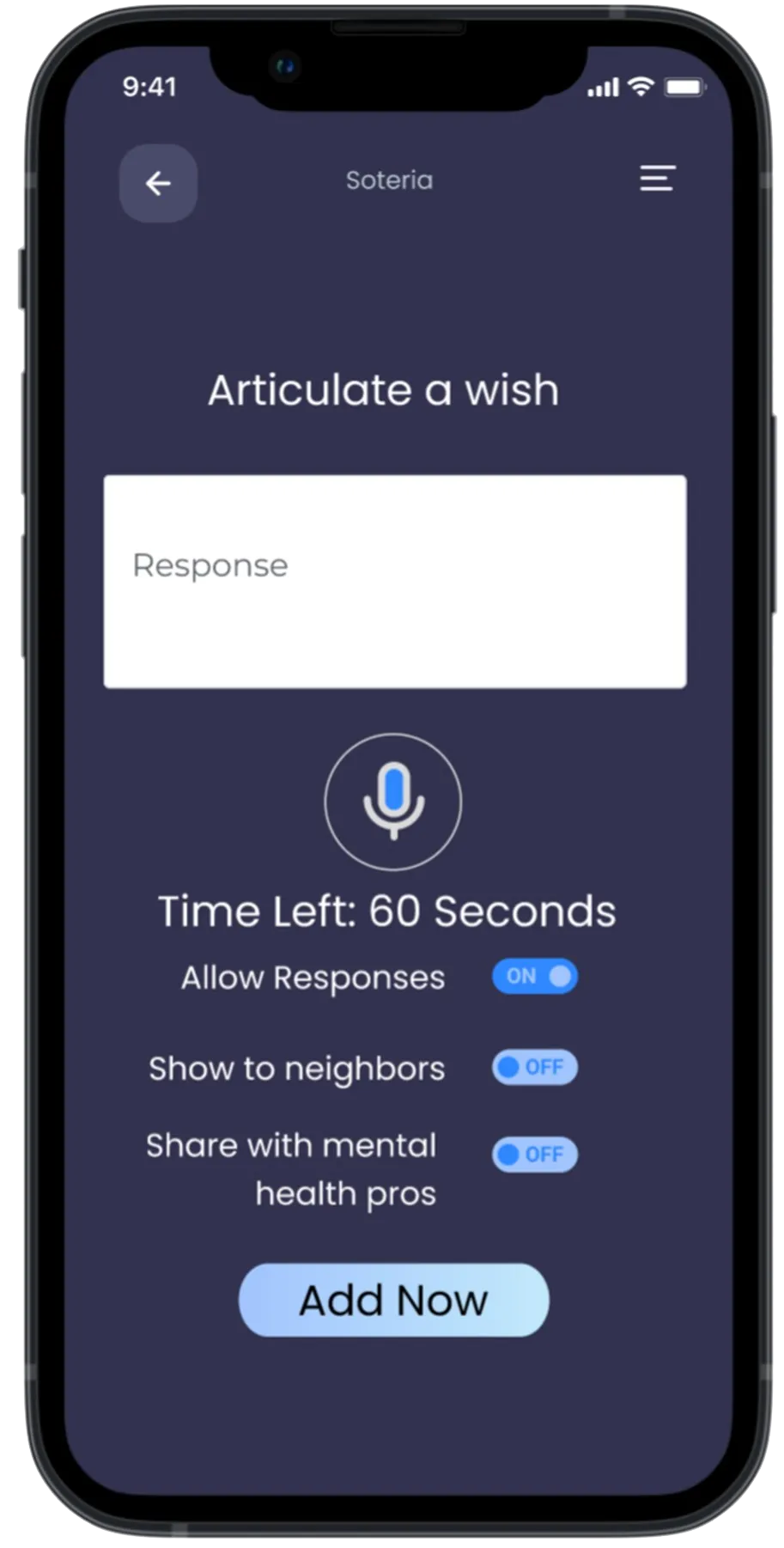
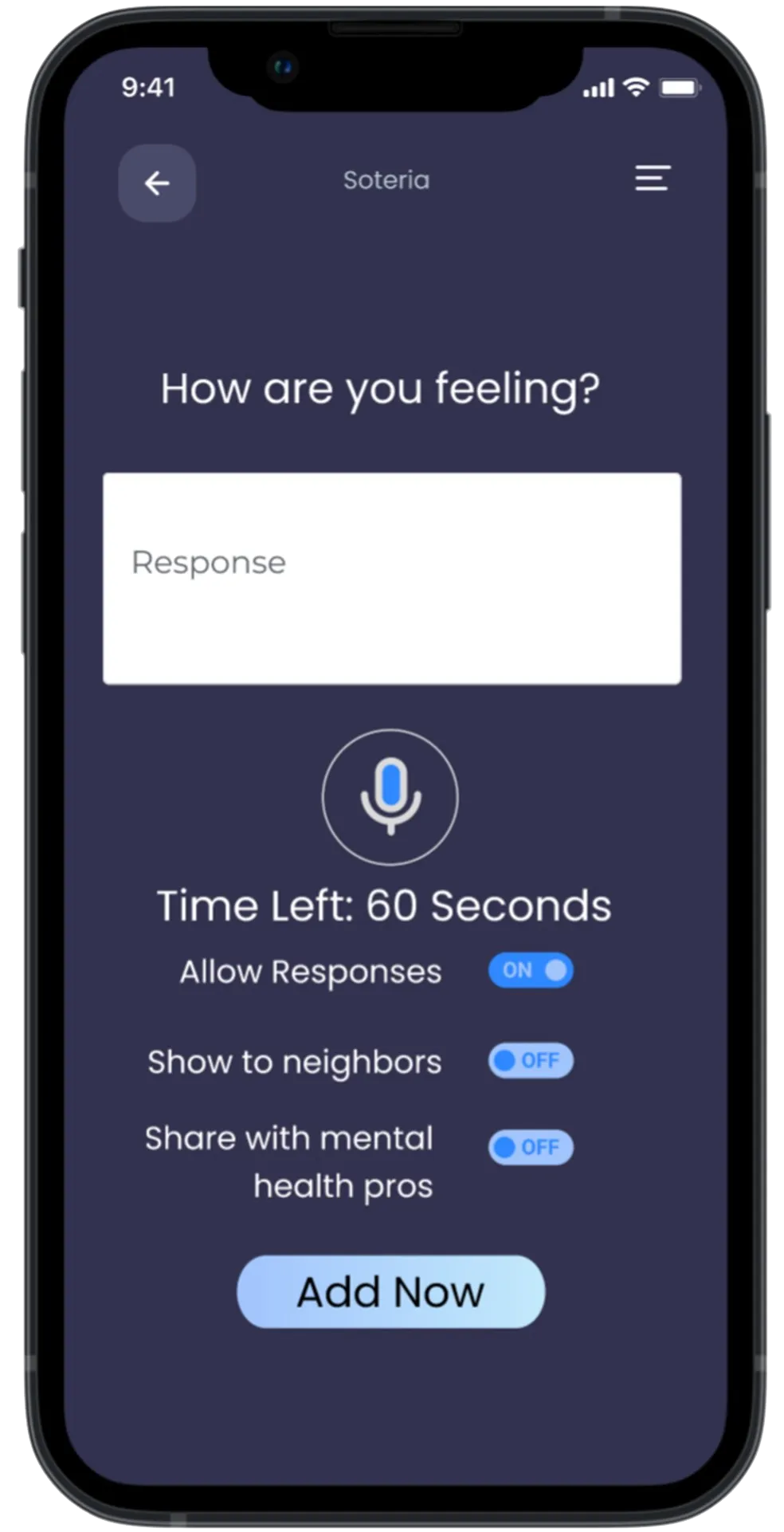
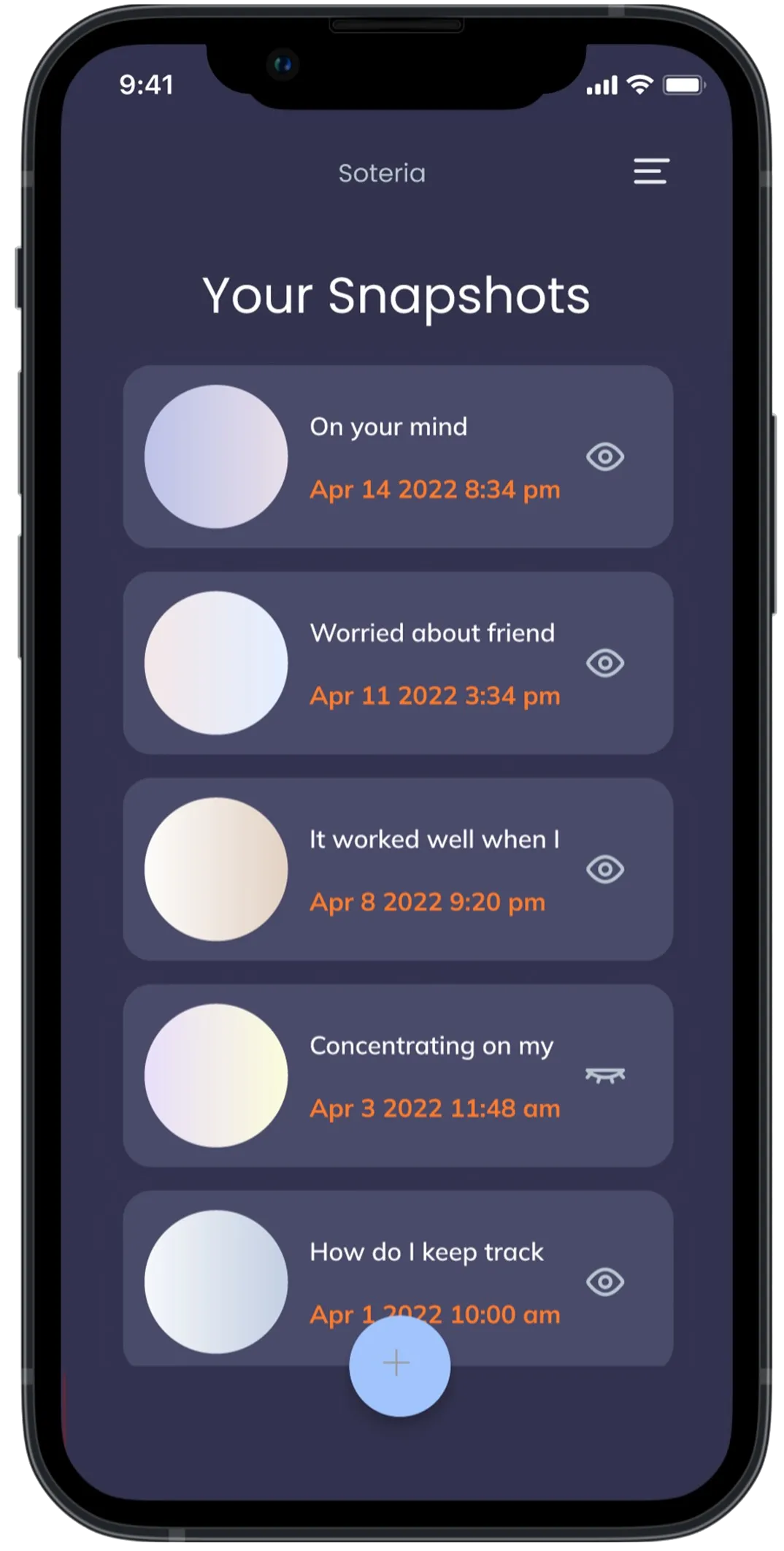
Time-bound mobile prompts (about a minute) ask for an anonymous snapshot of what you're thinking or feeling. It appears in your VR space. Each snapshot carries its own sharing controls, set inside the same minute it is written: whether others can respond, whether neighbors see it, and whether it reaches mental health professionals.
People curate. Selective self-presentation is the mechanism that produces unrealistic comparison, so the capture method has to outrun the impulse to edit.
Selective self-presentation on social media can be inconsistent with the true self and facilitates unrealistic social comparison (Alfasi, 2019; Tiggemann & Anderberg, 2020; Thorisdottir et al., 2019). Two design responses follow: anonymity in voice and text, which increases comfort with emotional disclosure (Huang et al., 2014), and time-bounding, which narrows the window for curation. The sharing controls sit on the snapshot rather than on the account, so opening something up is a decision about that one thing, made in the moment, rather than a setting chosen once and forgotten.
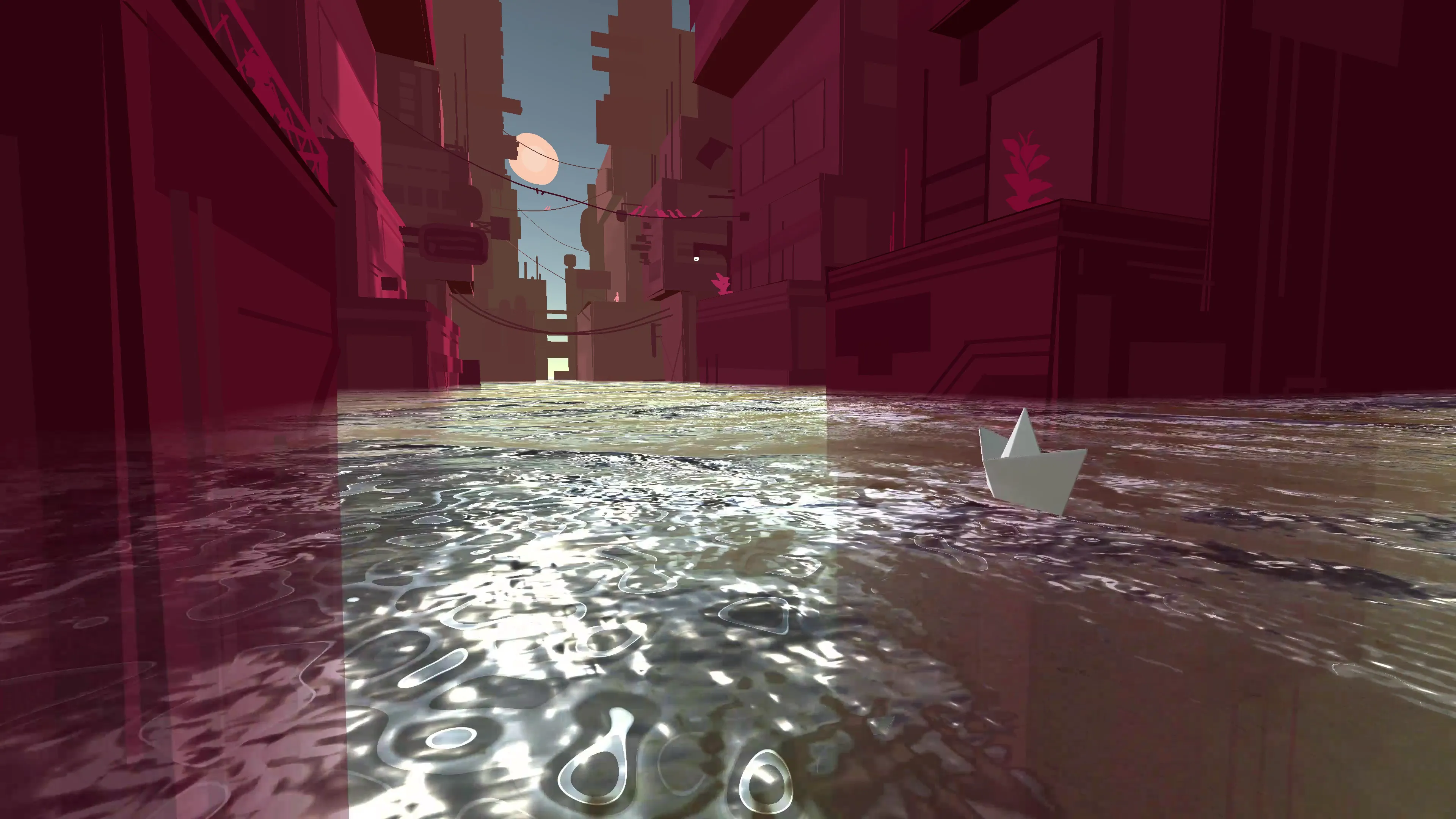
VR Garden
A visual field of your own snapshots alongside others'. Selecting a flower shifts the world to reflect the emotion it holds.
Disclosure has to lead somewhere, or it is just journaling in public.
Authentic self-disclosure benefits wellbeing (Reinecke & Trepte, 2014) and predicts greater perceived social support (Kim & Lee, 2011). Both how much someone discloses and the quality of it, meaning intent, valence and honesty, feed how authentic the disclosure reads to others, and from there how connected they feel (Luo & Hancock, 2020).
The process
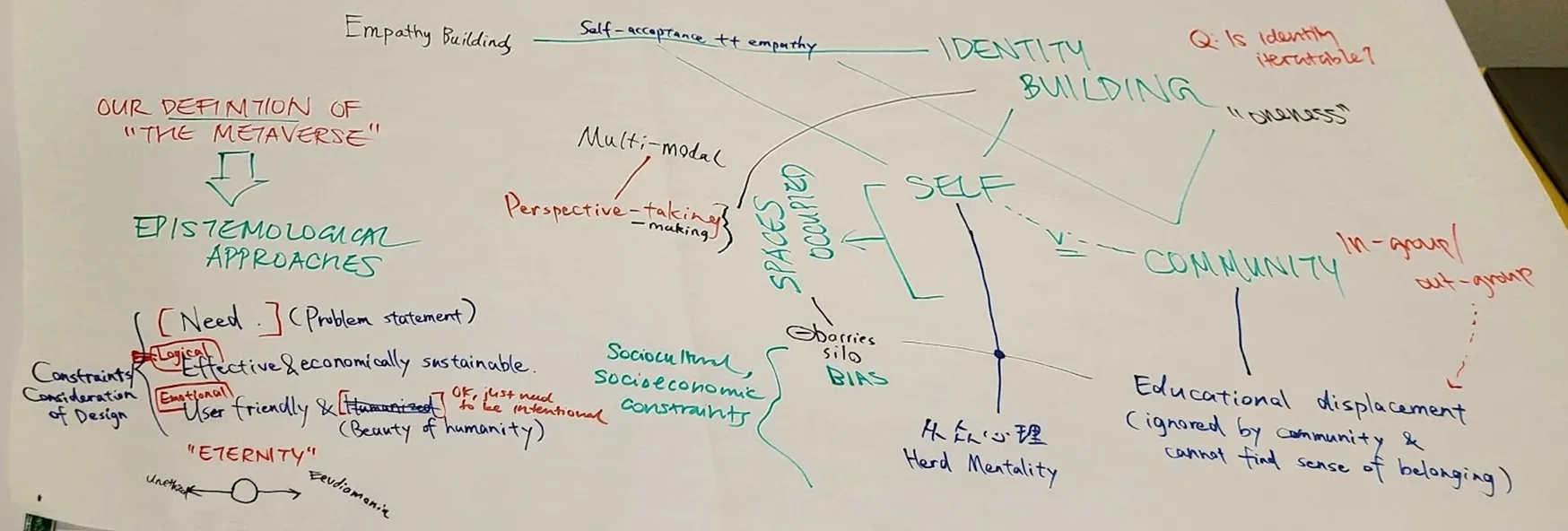
Understanding the user. Team brainstorming on learning problems in the metaverse; interviews with remote workers about needs, frustrations, and environments; personas and empathy maps built from those interviews.
 Brainstorming Session
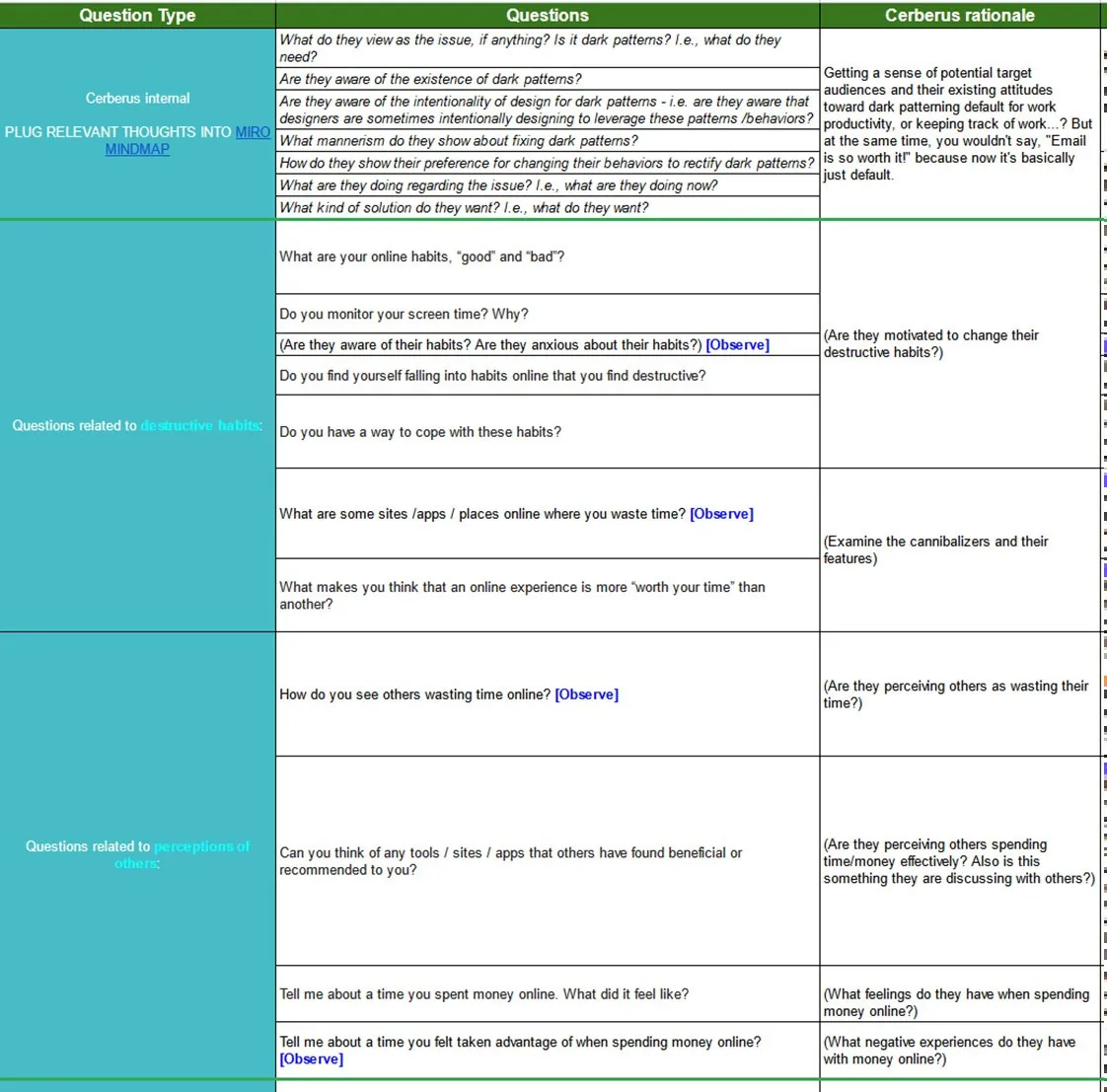 User Interview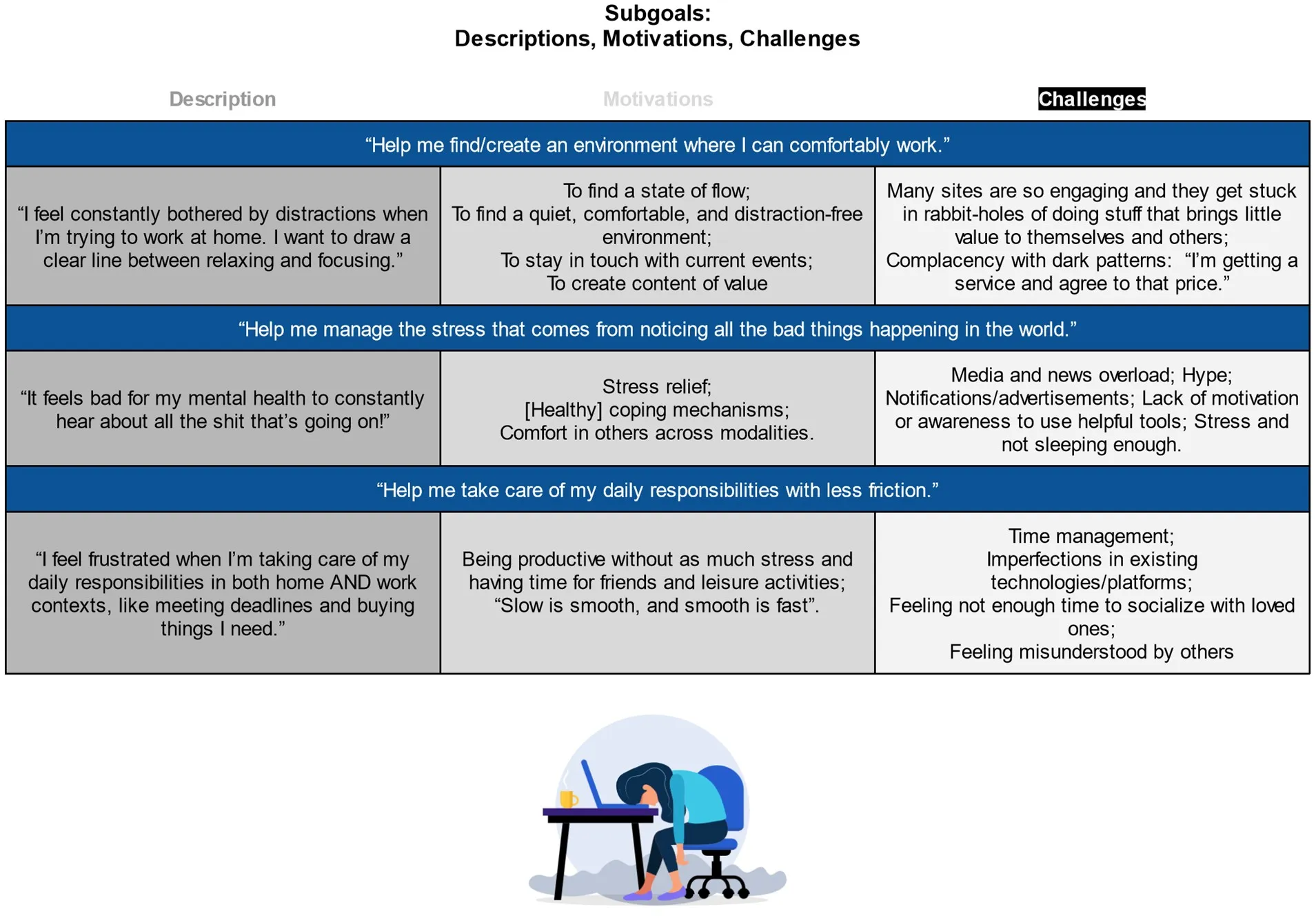
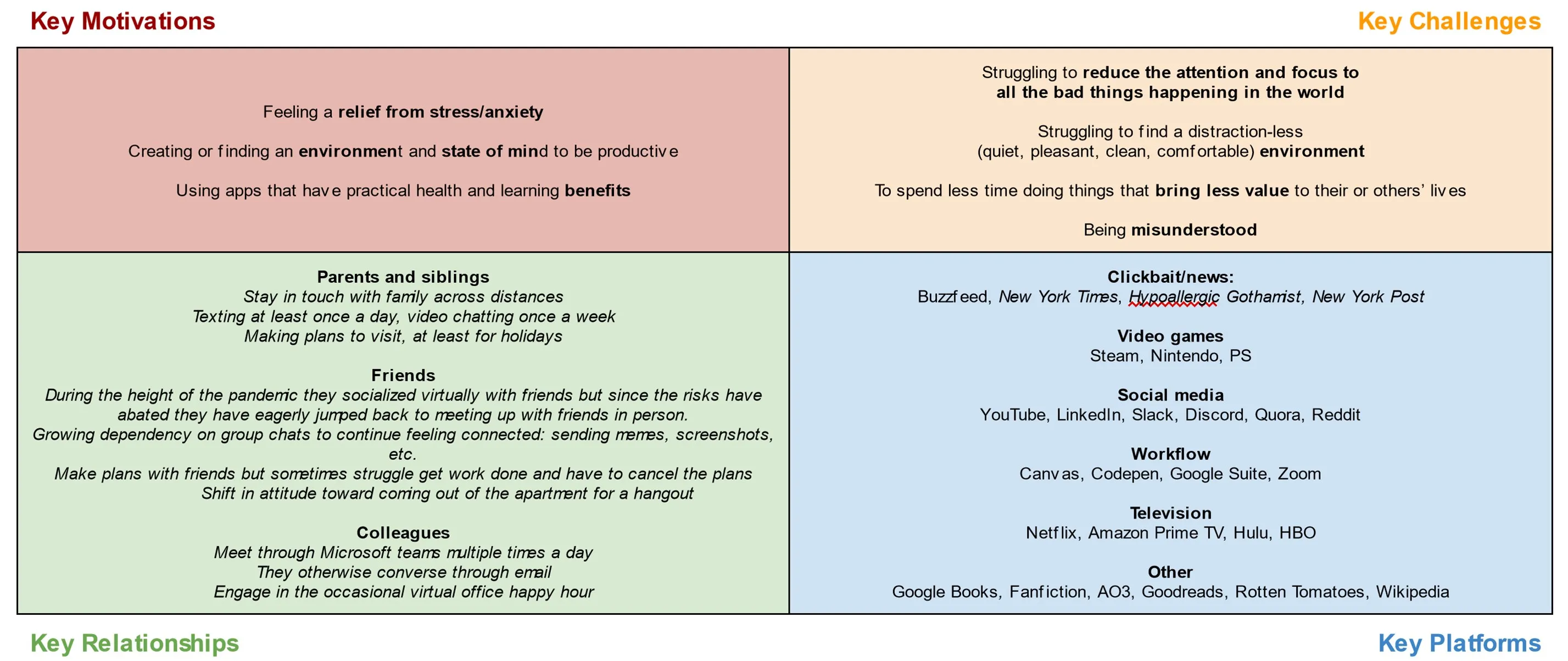 User Persona
 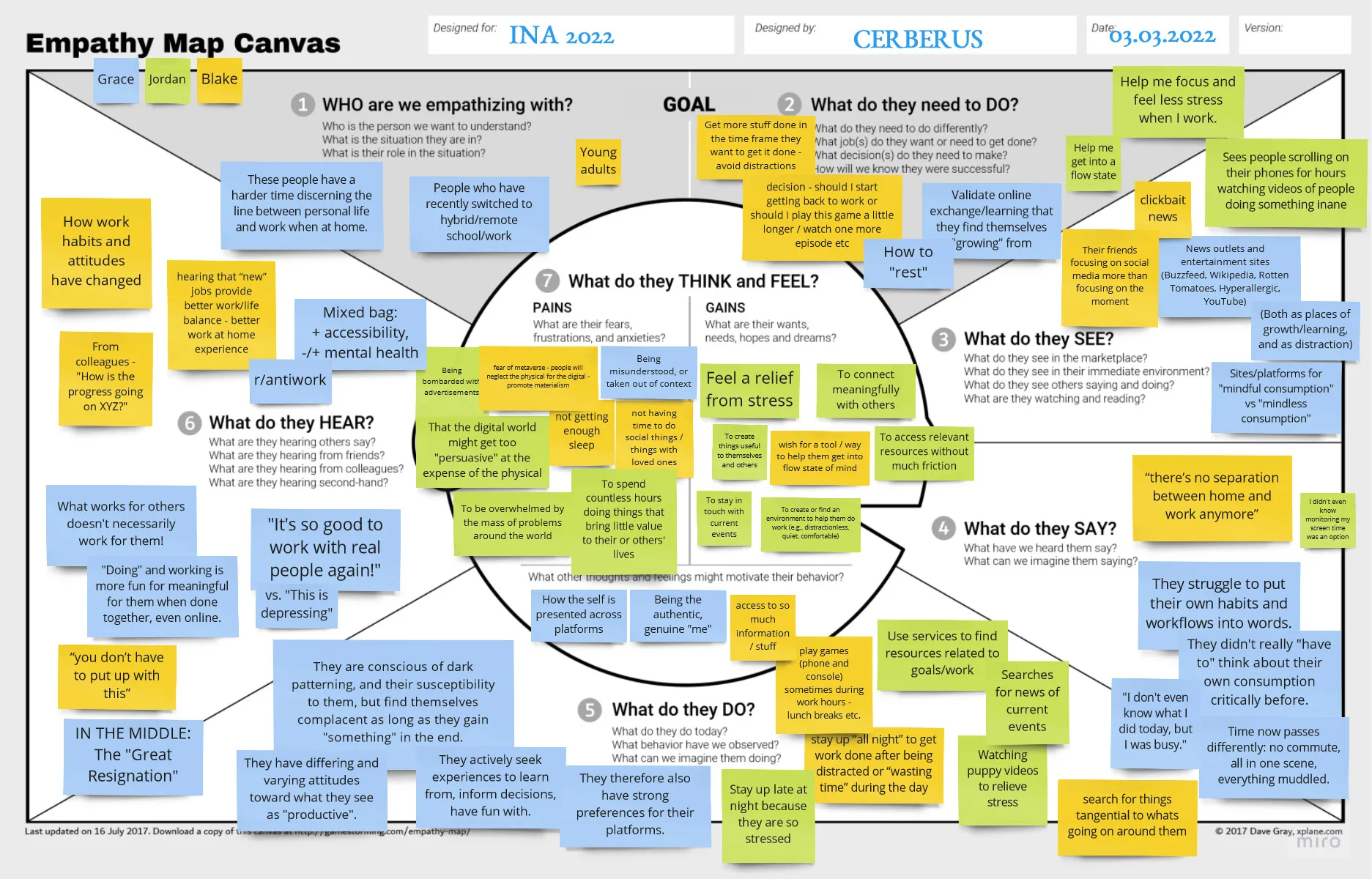 Empathy Map
Defining the problem. A literature review found remote-work stress compounded by isolation, workplace strain, and heavier social media reliance, which offers connection but carries misinformation and addiction risks (Eden, 2020; Cato et al., 2021; Dhir et al., 2021), and framed the whole as a web of direct and indirect stressors including fear of illness and economic uncertainty (Eden, 2020; Lundahl, 2020).
A competitor analysis covered twelve products: blocking, which requires self-discipline and ignores root causes (Freedom, and Offtime through it); AR, biofeedback and clinical games for regulation and attention, none of them tied to social media use (Inner Garden, PlayMancer, Journey to the Wild Divine, Mindlight, EndeavorRX, SmartCAT); gamification, dependent on sustained engagement (Forest, SuperBetter); and online communities and courses, the closest analogues to Soteria (Kooth, Togetherall, Performance Learning), where Kooth's own evidence was that forums add lower-level support rather than replacing a counsellor. A theoretical framework then modelled loneliness as a downward spiral: psychological factors drive maladaptive coping, coping shapes the environment, environment reinforces the beliefs.
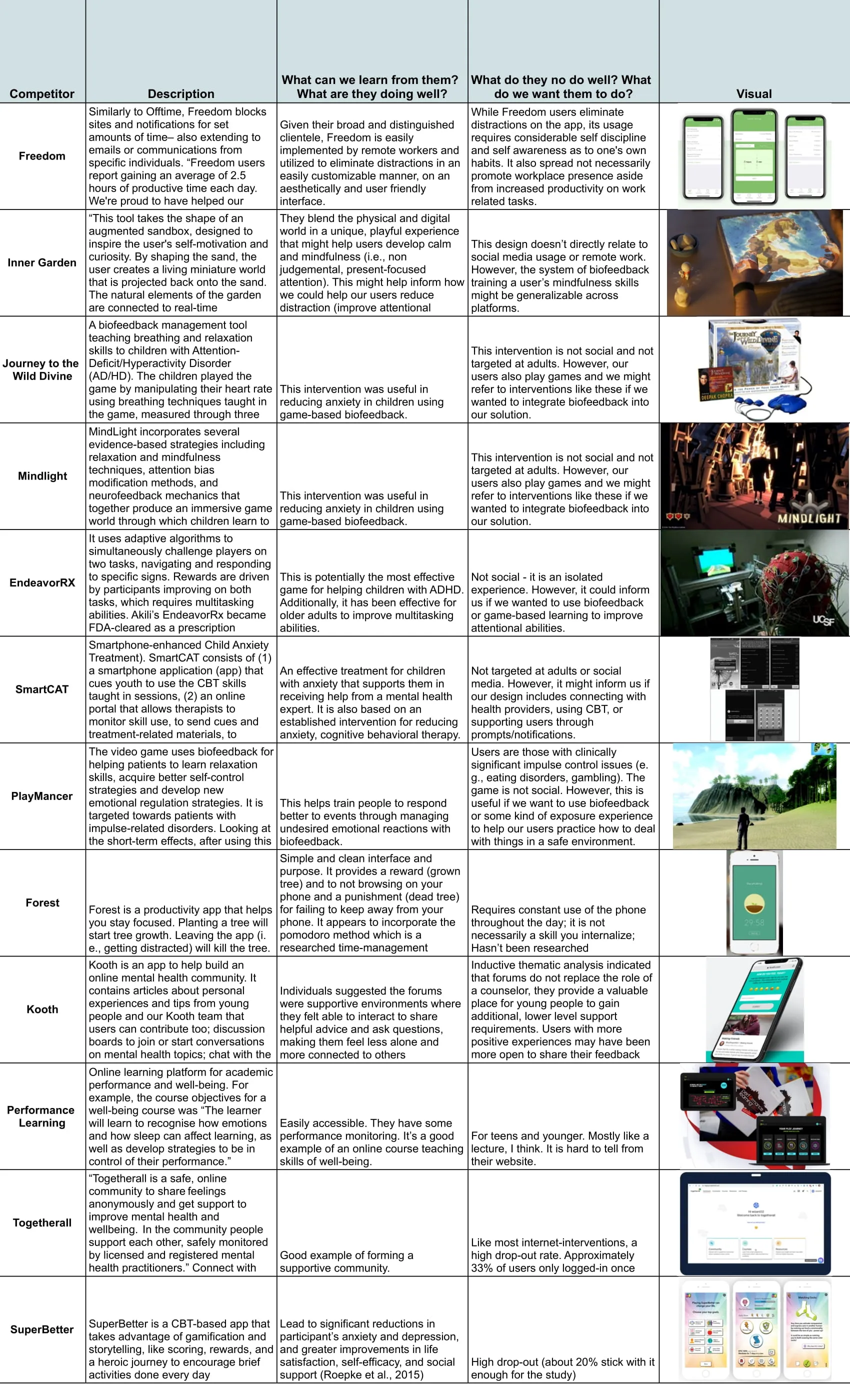 Competitor Review
Ideating. Three directions were explored and rejected before Soteria: Neopet (virtual pets mirroring emotional states), Water Cooler (a virtual space for work stress), and Planting Flags (marking emotional states in daily life for later reflection).
The same six features group a second way. This diagram sorts them by the mechanism each one serves rather than by the problem it solves, which is why it lists eight: the communal space appears twice, once for hope-sharing and once for problem-solving, and the snapshot appears twice, once for the capture and once for the anonymity.
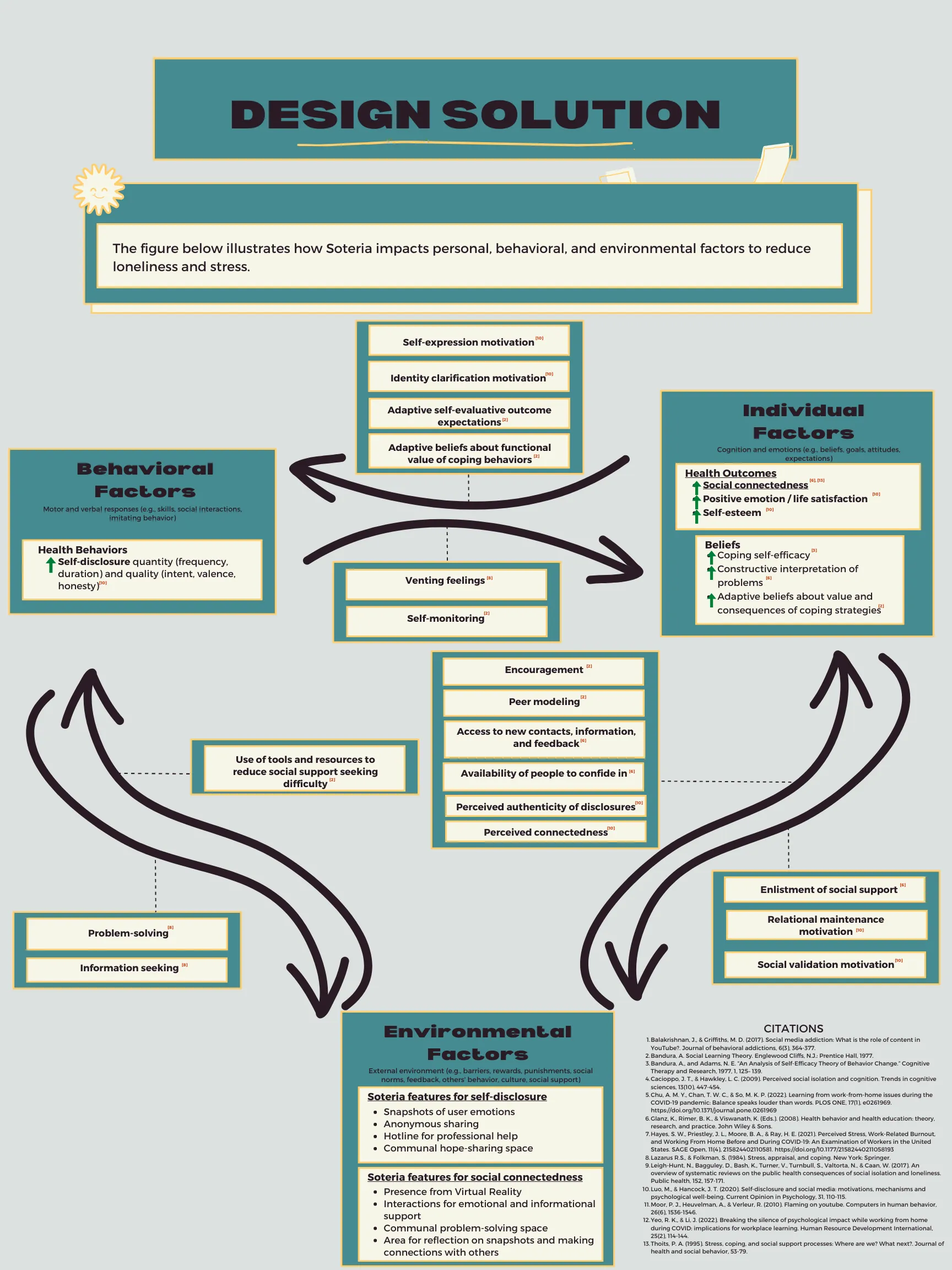 Design Solution
Prototyping and testing. Sketches and functional descriptions first. Several rounds of internal testing, then a round with peers and faculty mentors, then implementation of their feedback. The prototype was built as an interactive Figma phone demo plus an interactive VR demo in Tilt Brush and Unity 3D.
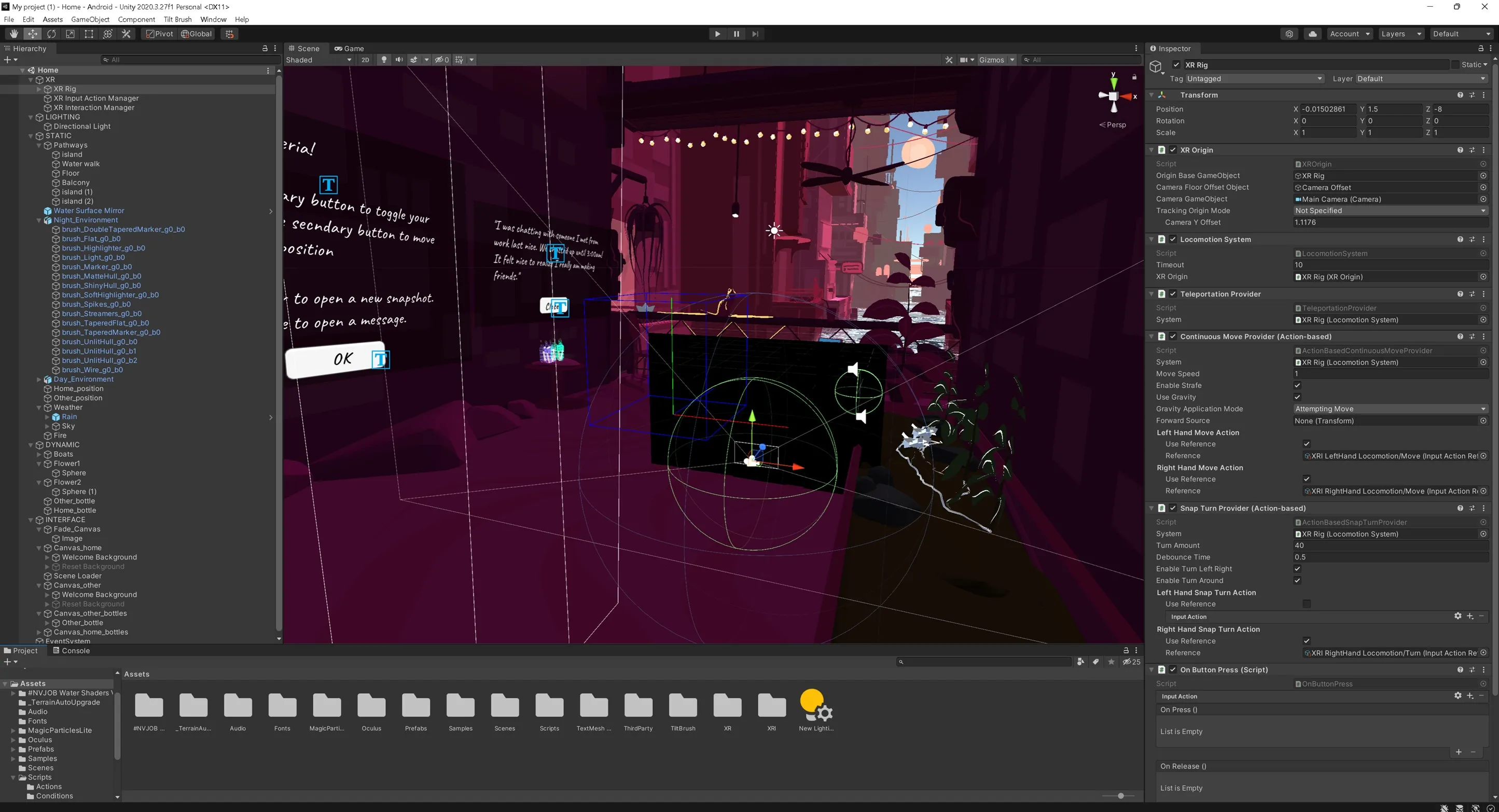 VR Prototype
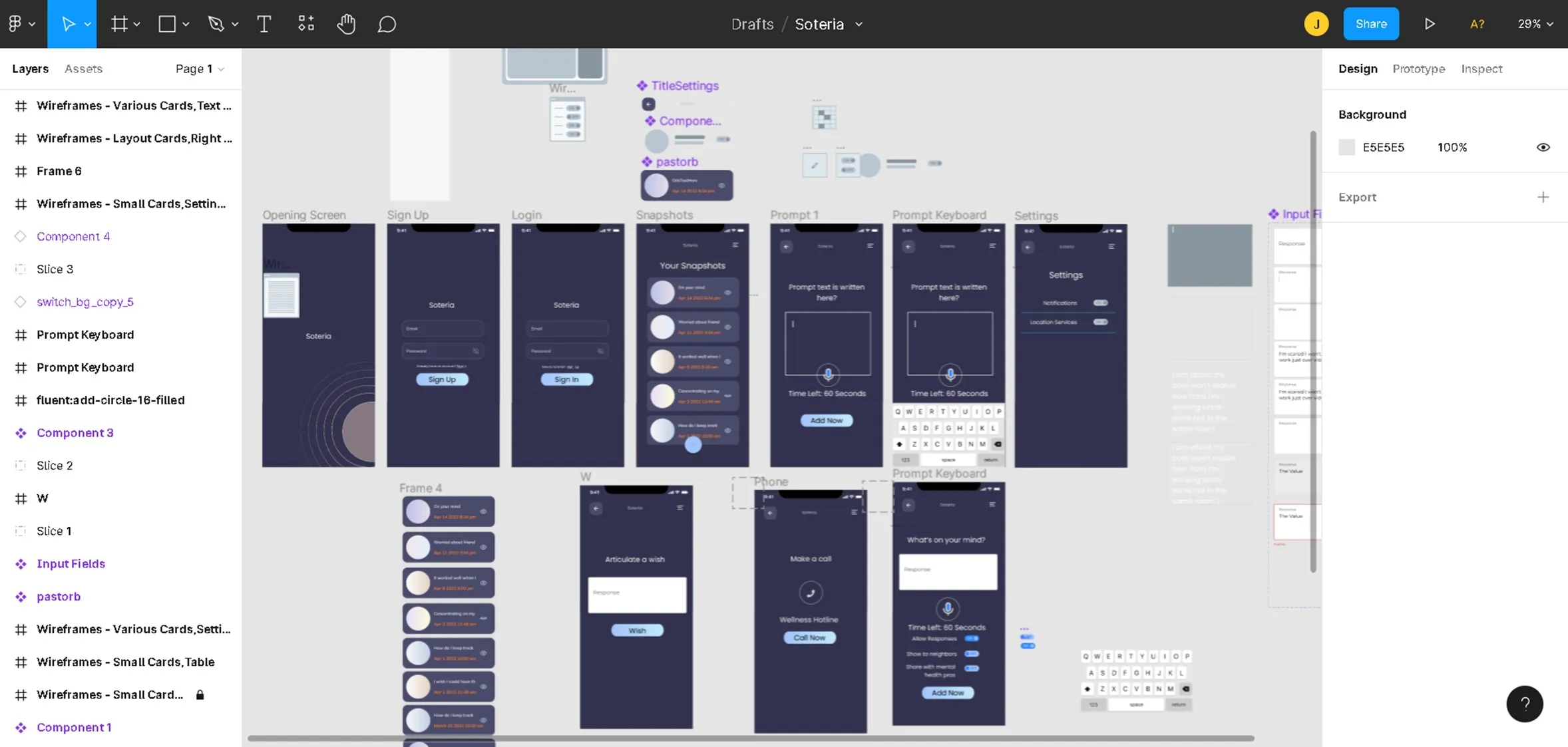 Mobile Prototype in Figma
Outcome
Soteria was built for the 2022 Innovation Award at Teachers College, Columbia University, a design competition themed that year on learning experiences in the metaverse. It won People's Choice, and was shown at the Digital Futures Institute.
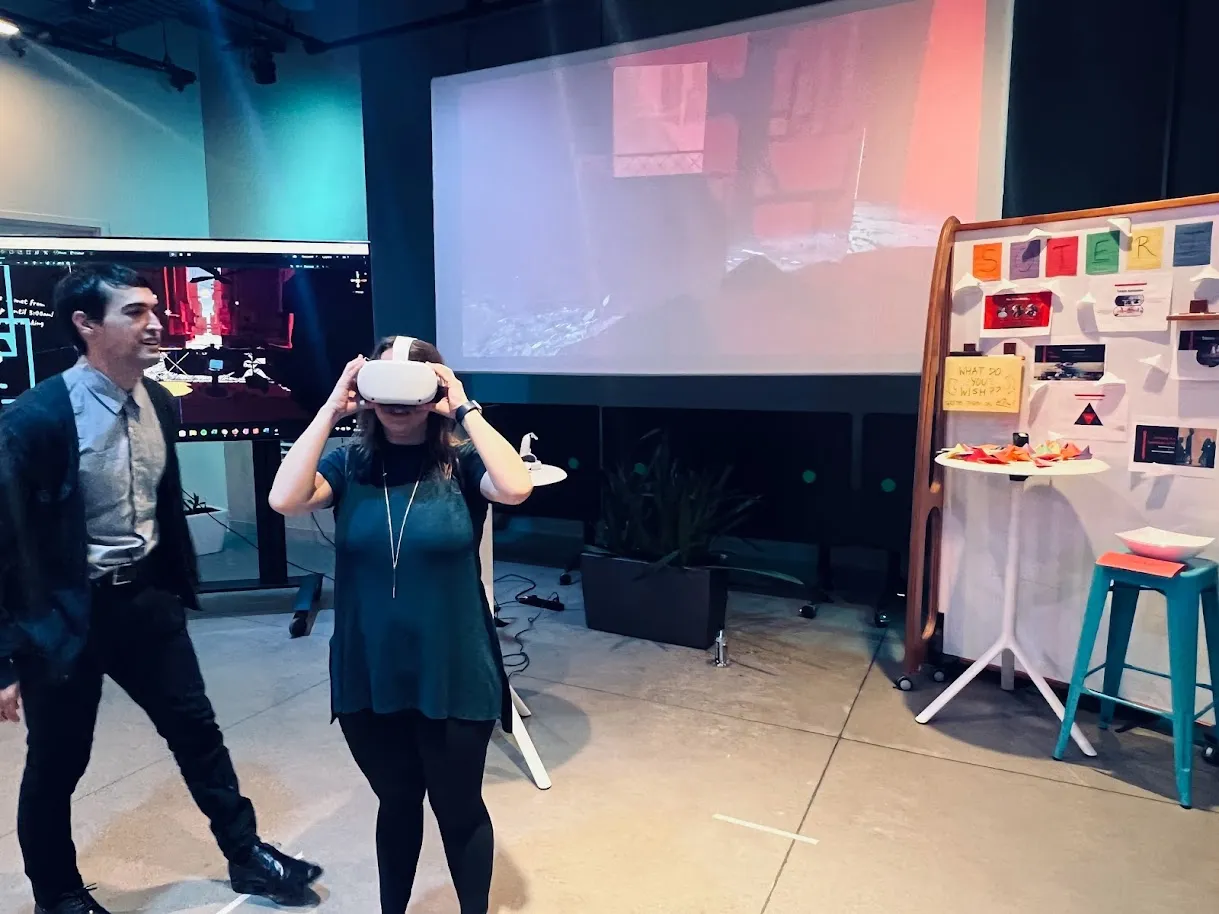 Innovation Awards
I was then invited into the DREAMS Project, Teachers College's research group for the Design and Research of Educational Applications of the Metaverse for Social impact. I led a small team there, creating further prototypes for wellbeing.
What I'd do differently
Soteria's design ran in a straight line. The Innovation Award schedule took us through Empathize, Define, Ideate, Prototype and Test once each, and the prototype never went back to the six remote workers we had interviewed.
The lesson I carry is to work in loops. Several rough versions, each tested with the people it is for, teach more than one polished build, and what testing turns up should steer the research rather than follow it. That is why I work in an Agile way now.